
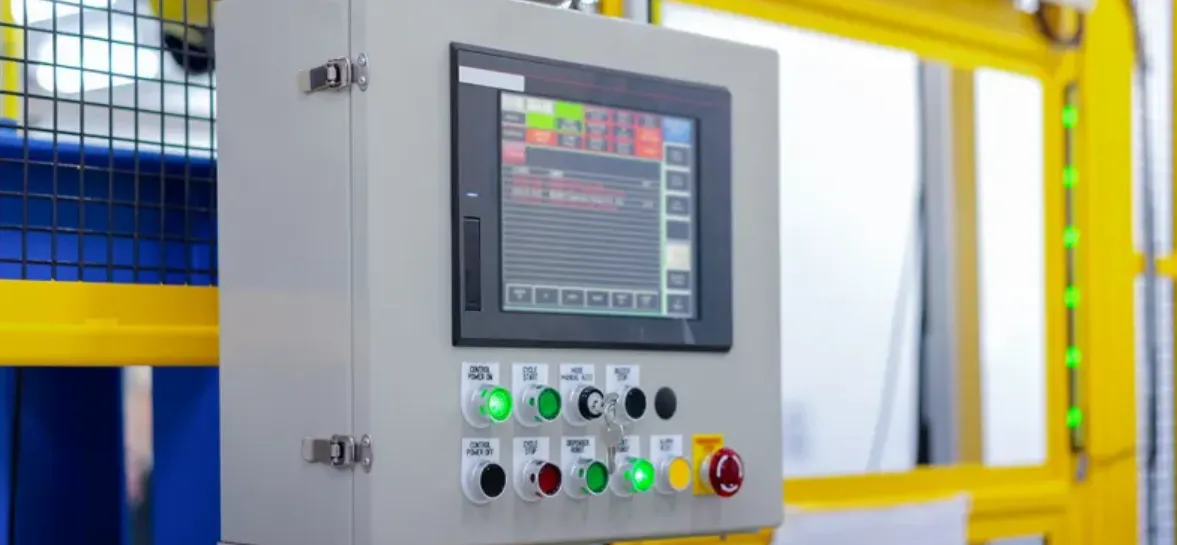
In the era of hyper-connectivity, the way we interact with machines is undergoing a profound transformation. From industrial control panels to smart home appliances and energy storage systems, the market demand has shifted. Users no longer settle for basic functionality; they expect intuitive, visually rich, and highly responsive Human-Machine Interfaces (HMI). For developers, the challenge lies in delivering smartphone-like experiences on resource-constrained MCU hardware without ballooning development costs or time-to-market.
The recently announced global partnership between GigaDevice and Qt Group marks a pivotal moment in solving this challenge. By integrating GigaDevice’s high-performance GD32H7 MCU series with the Qt for MCUs framework, the two companies are creating a unified ecosystem that streamlines the journey from initial prototype to mass production.
The “Hidden Barrier” in Embedded HMI Development
In a typical embedded development cycle, there is a recurring bottleneck: the lag between hardware selection and meaningful application development. Before an engineer can start designing the actual user experience, they must often spend weeks—or even months—optimizing the graphics stack, managing memory allocation, and debugging driver-level performance. If the foundational layer is unstable, even the most sophisticated UI designs will fail to deliver the required performance.
As Michele Rossi, Director of Qt for MCUs Product Management at Qt Group, noted, the time spent “getting a graphics stack running well on new hardware” is often the most significant hurdle. This friction prevents teams from focusing on what truly differentiates their product: the user interface and the core application logic.
Synergizing Hardware Power with Software Efficiency
The partnership between GigaDevice and Qt Group is more than a standard compatibility announcement; it is a commitment to deep-level optimization. The GD32H7 series, recognized for its high-performance processing capabilities and industrial-grade reliability, provides the raw power needed for complex, fluid graphics. Combined with the Qt for MCUs framework—known for its cross-platform efficiency and comprehensive UI library—this collaboration offers three key advantages:
- Optimized System Performance: Through joint validation, Qt for MCUs is being fine-tuned specifically for the GD32H7 platform. This ensures that developers can leverage the MCU’s hardware acceleration to its fullest potential, achieving higher frame rates, faster boot times, and lower memory footprints without sacrificing visual fidelity.
- Accelerated Time-to-Market: The two companies are working to provide comprehensive reference designs, software frameworks, and best-practice guidelines. These resources act as a “development accelerator,” allowing teams to bypass tedious driver-level configuration and jump directly into UI implementation.
- Expanded Developer Support: Beyond the code, the partnership aims to grow the developer ecosystem through joint technical training, community engagement, and customer enablement programs. This is particularly valuable for teams looking to adopt sophisticated HMI technologies for the first time.
Setting a New Paradigm for HMI
This collaboration has direct implications across several rapidly evolving sectors:
- In Industrial Automation: Engineers can now develop high-performance, safety-compliant interfaces that remain stable under the rigorous demands of factory environments.
- In Smart Home and Energy Storage: The ability to render crisp, responsive visuals on an MCU-based device allows manufacturers to provide premium user experiences that stand out in increasingly crowded markets.
- In Consumer Electronics: Rapid iteration is key. With an integrated platform, development teams can build brand-consistent interfaces across multiple product lines with significantly reduced rework.
Moving Forward
The true value of technical innovation is to unburden the developer. The partnership between GigaDevice and Qt Group is effectively removing the “reinventing the wheel” phase of embedded GUI development.
By abstracting the complexities of low-level graphics and providing a robust, high-performance foundation, these two industry leaders are enabling developers to redirect their energy from technical troubleshooting toward crafting the next generation of intuitive user experiences. For developers working in the industrial, automotive, or consumer IoT sectors, this integrated hardware-software platform offers a compelling pathway to build products that are not only smarter but significantly more engaging.