
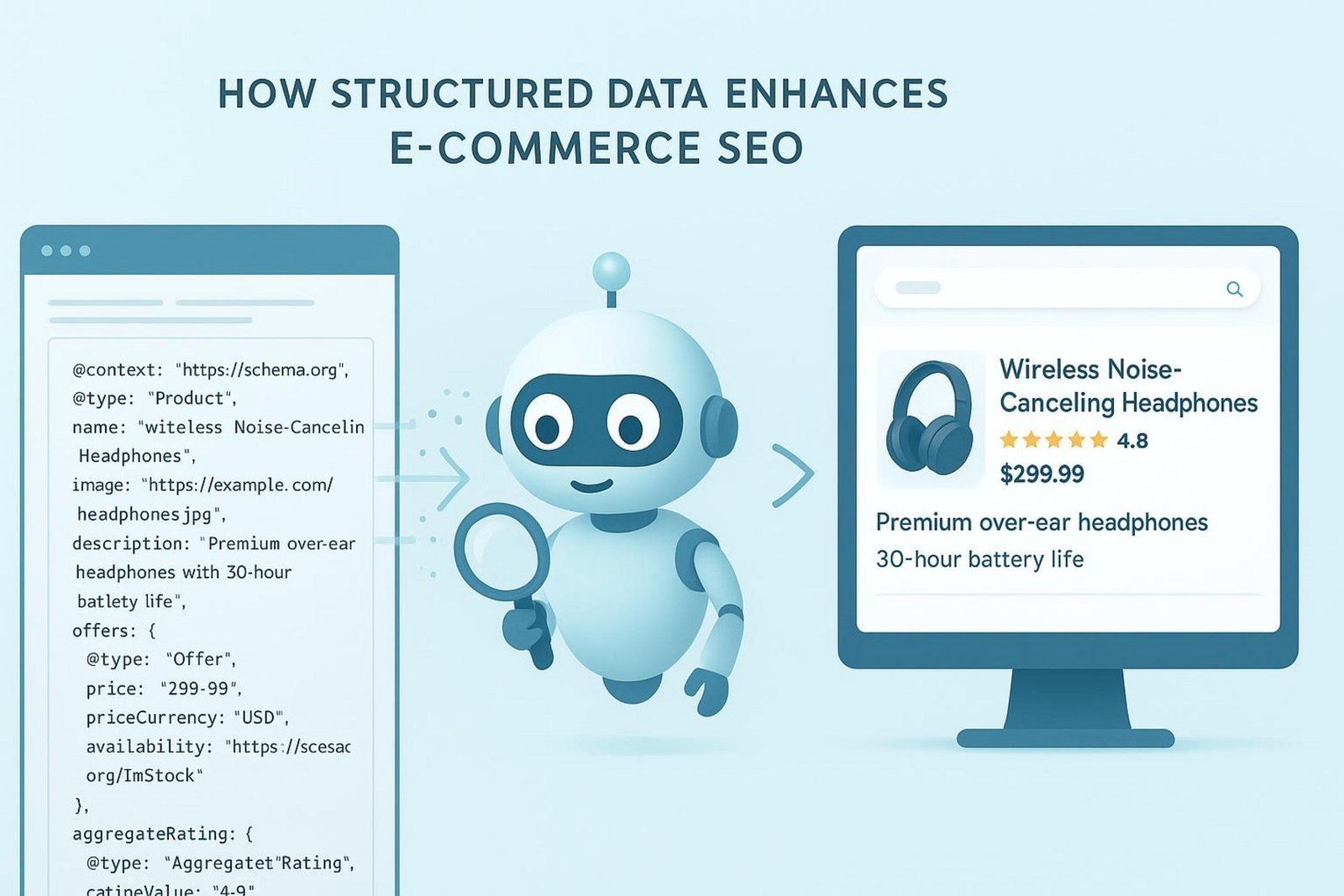
Structured data plays a key role in improving e-commerce SEO by helping search engines understand your pages and show them more clearly in search results. For online stores, adding structured data can lead to rich snippets, better visibility, and stronger user engagement, which can raise click-through rates (CTR) and sales.
Put simply, it helps your product info stand out in a crowded market. If you want to boost your presence, especially in competitive areas like SEO in the USA landscape, learning and using structured data is now a must.
Structured data’s path in SEO started in the early 2000s as search engines worked to improve result quality.
The launch of Schema.org in 2011 by Google, Bing, and Yahoo was a big step. It gave websites a shared set of schemas to mark up content, making it easier to optimize for search and helping search engines read web content more accurately.
What Is Structured Data in E-Commerce SEO?
Structured data in e-commerce SEO means organizing page content in a standard format that helps Google, Bing, and Yahoo understand what’s on your site. It’s a machine-readable way to give clear details about a page and label its content.
Think of it as a translator that helps search engines get the meaning behind the words, which is important for showing products and services correctly in search results.
By adding structured data, you give search engines detailed info that can lead to rich results like featured snippets and knowledge panels. This added clarity can improve visibility, making it easier for people to find your site.
For e-commerce sites, structured data is especially helpful because it highlights product names, prices, stock status, reviews, ratings, and even shipping info.
Structured Data vs. Schema Markup: Is There a Difference?
People often use “structured data” and “schema markup” as if they mean the same thing. Structured data is the wider idea: any standard format that helps machines read content (like an RSS feed or a database). In practice, teams such as NON.agency frequently clarify this distinction for clients implementing advanced SEO.
In SEO, though, when folks say “Schema,” “Schema markup,” or “structured data markup,” they usually mean Schema.org markup (most often in JSON-LD) that Google supports.
Schema.org offers a shared vocabulary for structuring data so search engines can better understand and display info. All schema markup is structured data, but not all structured data uses Schema.org.
Built with Google, Microsoft, Yahoo, and Yandex, Schema.org now includes 1000+ properties and types to describe entities and content. It acts as a common language sites can use to communicate with search engines.
How Does Structured Data Work with Search Engines?
Structured data adds specific code to your HTML that describes page content in a way machines can read. When a crawler visits, it finds and reads these blocks. Each property maps to a definition in Schema.org so meaning stays consistent across sites. This gives clear hints about your content-like whether a number is a price, a phrase is a product name, or a sentence is a review.
Because structured data is machine-readable and linked, search engines can connect your page to other entities like companies, people, places, or events. This builds a clearer picture of your site inside Google’s Knowledge Graph. Once your markup is valid and matches what users see on the page, search engines can use it to create rich results that show stars, images, FAQs, prices, and more, helping your result stand out.
Common Formats: JSON-LD, Microdata, RDFa
There are several formats you can use to mark up your site. Google prefers one of them:
- JSON-LD (JavaScript Object Notation for Linked Data): The format Google recommends most. It’s simple to add as a script tag in the head or body. It stays separate from your HTML, which keeps pages clean and easier to update and validate. You can label content without changing the page design.
- Microdata: Adds tags inside your HTML to label details like product info or reviews. It works well but takes careful work because it sits right in your visible content.
- RDFa (Resource Description Framework in attributes): Like Microdata, but supports more vocabularies and can describe more detailed relationships between items on a page.
All three work, but JSON-LD is usually easier to add and maintain because you don’t have to change your HTML layout.
Why Does Structured Data Matter for E-Commerce SEO?
Structured data matters a lot for e-commerce SEO because it helps your site “talk” to search engines clearly. In a crowded online market, having products listed isn’t enough; they need to be easy to find and shown in a useful way.
Structured data gives search engines exact product details, which can lead to richer search features that pull in more shoppers. This raises visibility, improves the site experience, and can lift sales.
By clarifying meaning, structured data helps search engines better match your products to user searches, including newer conversational and AI-driven results. It turns basic page info into rich snippets that stand out, grab attention, and send users straight to your products, building trust before they even click.
Improves Search Rankings and Visibility
Structured data is not a direct ranking factor, but it can help rankings and visibility indirectly. By making content easier for search engines to understand, it plays a big part in how your pages perform. Sites that use structured data well often get better visibility because search engines can match them more accurately to searches.
When a crawler clearly understands a page through structured data, it may rank the page higher due to better relevance. Good markup signals that your site offers useful, well-organized info, making it look more trustworthy in your niche. Over time, this can bring in more organic traffic as people find and interact with your content.
Enables Rich Results and Product Snippets
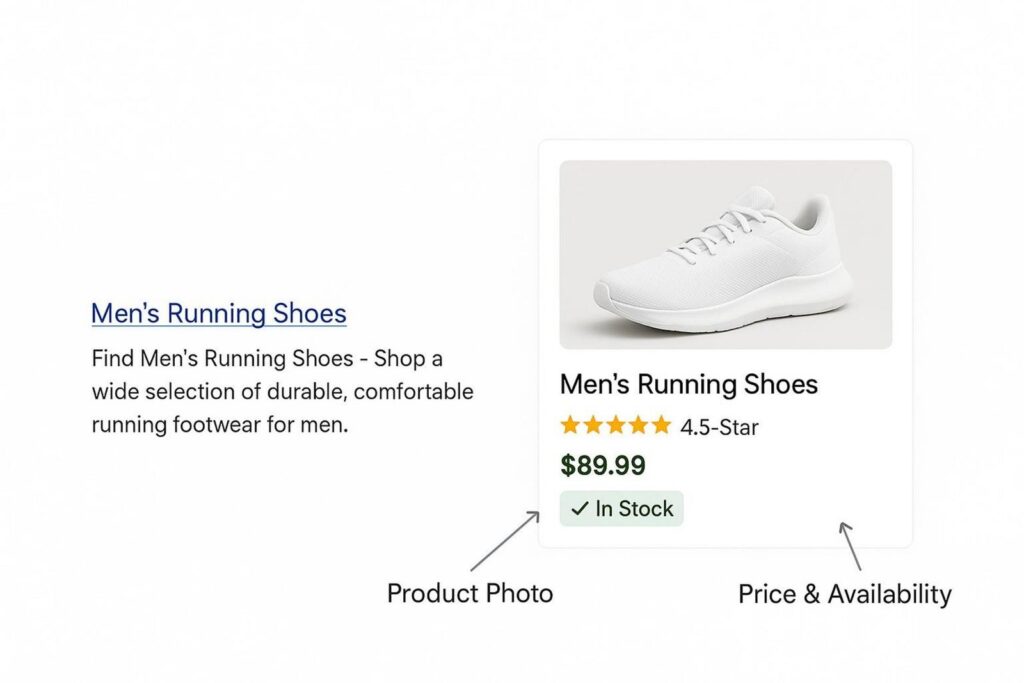
One of the clearest wins with structured data is rich results and product snippets. These enhanced listings show more than just a title and meta description. For stores, they can display product names, prices, stock status, and star ratings right on the results page.
Rich snippets make your listings more attractive. For example, a result for “Men’s Running Shoes” might show a price of $89.99, “In Stock,” and a 4.5-star rating from 250 reviews. These extras help your result stand out and give shoppers key info upfront so they can decide faster.
Increases Click-Through Rates (CTR)
Those extra details in rich snippets often lead to higher CTR. When users see ratings, prices, or availability next to your link, they’re more likely to click your result over a plain one. The added info builds trust and helps users choose faster.
If two similar products appear, the one with reviews, pricing, and stock info usually gets more clicks. This lift in CTR matters for stores because it brings more traffic and more chances to convert.
Supports Voice Search and Generative AI Queries
As tech moves forward, structured data is key for voice search and AI answers. Voice queries tend to be longer and more specific. Assistants like Google Assistant, Siri, and Alexa rely on structured data to give quick, accurate replies. Marked-up content is more likely to appear in these responses.
Also, structured data helps AI systems and large language models pull accurate, context-rich info from your site. With AI-powered search growing in 2025, clear markup helps your content get cited in AI answers, voice replies, and conversational results. As voice use grows, having structured data in place will help you reach these users and keep your store visible.
Improves User Experience with Detailed Product Information
Structured data helps search engines show your product info correctly, which improves the user experience. Shoppers can quickly see if an item is in stock, what it costs, and how others rate it. Quick access to key details reduces friction and makes buying easier.
By giving users more targeted info right on the results page, structured data makes searches faster and more satisfying. The extra context builds trust and encourages people to visit and buy from your store.
Which Types of Structured Data Benefit E-Commerce Sites?
Online stores can use many structured data types to improve how they appear in search. These schemas help search engines read product details, offers, and customer feedback so they can show rich, useful snippets. Picking the right schemas is important for getting the best impact.
From showing product specs to highlighting reviews and improving navigation, each schema has a role in giving a complete, appealing view of your catalog. Using the right ones helps search engines read your site clearly, which can lift search performance and make the user experience better.
Product Schema: Featuring Product Details
The Product schema is probably the most important for e-commerce sites. It gives search engines key product info so they can show it correctly in search results. Important properties include name, description, brand, and stock status (In stock, Out of stock, Pre-order).
Adding Product schema lets Google and others show this info right in results. It helps shoppers quickly understand your product and helps search engines read your catalog, including variants. It’s the base that other e-commerce schemas build on.
Offer Schema: Showcasing Pricing and Availability
Offer schema works with Product schema to add details on price and availability. You can set price, currency, and condition (new, used, refurbished). You can also add “price valid until,” which is useful for sales and limited-time deals.
Using Offer schema helps highlight discounts and current prices, pushing users to act faster. Clear pricing and availability make listings more transparent and can lift conversions.
<script type=”application/ld+json”>
{
“@context”: “https://schema.org/”,
“@type”: “Product”,
“name”: “Example Men’s Running Shoes”,
“description”: “Durable and comfortable running shoes.”,
“brand”: {
“@type”: “Brand”,
“name”: “Example Shoes”
},
“offers”: {
“@type”: “Offer”,
“priceCurrency”: “USD”,
“price”: “89.99”,
“availability”: “https://schema.org/InStock”,
“itemCondition”: “https://schema.org/NewCondition”
}
}
</script>
Review and AggregateRating: Using Customer Feedback
Reviews and ratings are strong social proof in online shopping. Review and AggregateRating schemas let search engines show this feedback in rich snippets. Review shows individual reviews; AggregateRating shows the average score across many reviews.
These schemas include the rating value, the top rating (often 5 stars), and total review count. Seeing stars and reviews in results helps your products stand out, builds trust, and reassures shoppers, which can lead to more sales.
<script type=”application/ld+json”>
{
“@context”: “https://schema.org/”,
“@type”: “Product”,
“name”: “Example Men’s Running Shoes”,
“aggregateRating”: {
“@type”: “AggregateRating”,
“ratingValue”: “4.5”,
“bestRating”: “5”,
“reviewCount”: “250”
}
}
</script>
BreadcrumbList: Improving Navigation and Search Display
The BreadcrumbList schema is important for helping search engines read your site structure and for guiding users. Breadcrumbs show the path to a page, like “Home > Men’s Clothing > Jackets > Leather Jackets.” This helps users know where they are and how to move around your site.
<script type=”application/ld+json”>
{
“@context”: “https://schema.org”,
“@type”: “BreadcrumbList”,
“itemListElement”: [{
“@type”: “ListItem”,
“position”: 1,
“name”: “Home”,
“item”: “https://example.com/”
},{
“@type”: “ListItem”,
“position”: 2,
“name”: “Men’s Clothing”,
“item”: “https://example.com/mens-clothing”
},{
“@type”: “ListItem”,
“position”: 3,
“name”: “Jackets”
}]
}
</script>
Adding BreadcrumbList helps users and also improves SEO. Search engines can crawl and index pages more efficiently, and often show a clear breadcrumb trail in results, which can help people find related products or categories.
FAQ Schema: Addressing Buyer Questions
FAQ schema lets you add common questions and answers to product or category pages. Search engines can show these as expandable rich snippets. This is a useful way to give quick answers, reduce bounce rates, and improve satisfaction.
For example, a question like “How long is the warranty?” with an answer like “One year from the manufacturer” can appear right in results. Quick, clear answers can also help with voice queries, where users often ask direct questions.
<script type=”application/ld+json”>
{
“@context”: “https://schema.org”,
“@type”: “FAQPage”,
“mainEntity”: [{
“@type”: “Question”,
“name”: “How long is the warranty?”,
“acceptedAnswer”: {
“@type”: “Answer”,
“text”: “One year from the manufacturer.”
}
}]
}
</script>
VideoObject: Highlighting Product Videos
If your site includes product videos (demos, tutorials, or ads), VideoObject schema is very useful. It helps search engines understand and index your videos so they can appear properly in Google results. You can mark up title, description, thumbnail URL, duration, and upload date.
VideoObject can trigger video thumbnails and extra info in search, helping your listings stand out in both regular and video results. This is a strong way to show products in action and engage shoppers who prefer visual content.
Organization and LocalBusiness Markup
Beyond product schemas, Organization and LocalBusiness markup are important for trust and basic business info. Organization schema lets you share your logo, contact info, business IDs, and even store-wide return policies. This helps Google understand your brand and can lead to richer brand displays.
If you also have physical stores, LocalBusiness data is important. It shares address, hours, and service area. This helps with local SEO, can surface your store in local features and Google Maps, and may be supported further if you register with Google My Business.
How to Add Structured Data to Your E-commerce Website
Adding structured data can seem technical, but there are several ways to do it-from hand-coding to using tools and plugins. The goal is to add schema markup to your HTML so search engines can read your content. Your choice depends on your skills and your platform.
Whatever you choose, the key steps are picking the right schemas, marking up content accurately, and testing carefully to make sure search engines read it correctly. Good implementation helps you get the full benefits of structured data.
Manual Schema.org Markup Implementation
If you’re comfortable with HTML and some technical work, manual Schema.org markup gives you the most control. Most sites now use JSON-LD for this, which Google recommends.
To add JSON-LD by hand, place a small JSON-LD script in the <head> or <body> of the page. Include properties like product name, rating, price, and availability. See Schema.org for the full vocabulary and examples for products, reviews, offers, and more. While more work than other options, manual coding gives precise control and works across search engines.
Using Plugins and Ecommerce Platform Features
For many stores on CMSs like WordPress or on e-commerce platforms, plugins or built-in features are the easiest path. Tools like Yoast SEO or Schema Pro can auto-generate structured data from your content, so you don’t have to write code.
Platform extensions can also add structured data. These tools usually have simple forms for entering product info, and they create the markup for you. This speeds things up, keeps markup consistent, and reduces errors.
Google’s Structured Data Markup Helper
Google’s Structured Data Markup Helper is a helpful option, especially for beginners. It lets you point and click on page elements to create markup. Typical steps:
- Open Google’s Structured Data Markup Helper.
- Pick the data type (for example, Products).
- Paste the product page URL.
- Highlight elements like name, price, and reviews, and assign tags.
- Copy the generated code and add it to your page.
This tool is great for single pages and for learning how markup works. For larger sites, plugins or template-level markup are usually more efficient.
Testing Structured Data for Errors
After adding structured data, it’s very important to test it so search engines can read it and no errors block rich results. Google offers good tools for this:
- Google’s Rich Results Test: Enter a URL or code to see which rich results your page can get. It also flags errors or warnings.
- Schema Markup Validator: Useful for checking your markup against Schema.org standards.
These tools point out issues so you can fix them before Google crawls your site. Skipping testing can cause engines to misread or ignore your data. Regular testing helps keep your markup working and matching the visible content.
What Are Common Structured Data Mistakes in E-Commerce?
Structured data can help a lot, but mistakes can cancel those benefits or even cause penalties. Stores with fast-changing catalogs can run into common errors. Avoiding these is important if you want structured data to help your SEO.
Success depends on accuracy, relevance, and proper validation. Ignoring these can lead to weaker search presence, unhappy users, and missed chances for rich results.
Providing Inaccurate or Outdated Information
One of the most common and serious mistakes is using inaccurate or old data. Your markup must match what’s on the page. If you mark an item “in stock” when it’s not, or show an old price, users will be frustrated. Google warns that misleading or hidden markup can bring penalties, including removal of rich results.
Make sure your schema matches the visible content. Update often for things like price, stock, and review counts. Bad data hurts trust and can signal to search engines that your site isn’t reliable, which can hurt rankings.
Excessive or Irrelevant Structured Data Usage
Another mistake is marking up too much or adding markup that doesn’t fit the page. More markup is not always better. Overdoing it can confuse search engines and reduce effectiveness. Google suggests focusing on the most important elements tied to the page’s main content.
For product pages, focus on Product, Offer, and Review/AggregateRating. Only add other schemas if they clearly help that page. Don’t mark up content users can’t see or that isn’t central to the page.
Neglecting to Validate and Monitor Markup
A common, avoidable mistake is skipping validation and ongoing checks. Structured data is not a “set and forget” task. After adding it, use Google’s Rich Results Test or Schema Markup Validator to catch errors and check eligibility for rich results. If you don’t, search engines may misread or ignore your data.
Guidelines change often, and Google updates support and display of rich results. Keep an eye on Google Search Console’s Enhancements reports. Fix issues quickly. Without regular checks, your markup can become outdated or break, and you’ll lose SEO benefits.
Structured Data Best Practices for E-Commerce Businesses
To get the most out of structured data, go beyond basics and follow a clear plan. Pick the right schemas and keep them accurate, consistent, and current across your site. These practices help more people see your products, improve user experience, and keep your SEO strong in a fast-moving digital space.
By following these guidelines, you can make structured data clearly communicate the value and details of your products to search engines and shoppers. Focus on accuracy, relevance, and ongoing improvements.
Choosing Relevant Schemas for Product and Category Pages
The first and most important step is choosing the right schemas for each page. Don’t add markup that doesn’t fit. For product pages, focus on Product, Offer, Review, and AggregateRating for full product, price, stock, and feedback details. If you have videos, include VideoObject.
For category pages, ItemList helps describe groups of products. Also add BreadcrumbList on relevant pages to show site hierarchy. If your products have common questions, FAQPage can help. Pick schemas that match the page’s main purpose and content.
Keeping Markup Consistent and Up-to-Date
Consistency and accuracy are very important. Product names, prices, descriptions, and stock should be marked up the same way across your store, and markup must match what users see. Mismatches can cause search engines to ignore your markup or, in serious cases, issue penalties.
Structured data changes as your products change. Prices, stock, and reviews update often. Set up processes to keep markup current. For large catalogs, add markup at the template level in your CMS or platform so each product gets the right data automatically. Run regular audits to fix outdated or wrong info.
Monitoring for Search Algorithm Updates
SEO changes often, and so does support for structured data. Google updates which schema types it supports and how rich results appear. For example, in 2023, Google reduced visibility for FAQ rich results. Stores should stay informed to keep their strategy working.
Follow Google Search Central, industry news, and webinars to stay up to date. Adjust your markup as needed so your pages keep qualifying for rich results and maintain the best visibility. Being active here can also help you spot new chances before others do.
How to Measure Structured Data Impact on SEO
Adding structured data takes time and resources, so measuring results is important. Tracking impact helps you see what’s working, find fixes, and show ROI. Google offers reliable tools with useful insights into how your markup performs.
By tracking key metrics and fixing issues, you can keep structured data helping your store’s visibility, traffic, and conversions. A data-led approach supports continuous improvement.
Tracking Rich Result Performance in Google Search Console
Google Search Console (GSC) is the main place to measure performance. Go to “Enhancements” to see reports for “Products,” “Reviews,” “FAQs,” and more. These show which pages have valid markup, which are eligible for rich results, and any errors or warnings.
These reports include impressions, clicks, and average CTR for pages with rich snippets. Watch these metrics to see how often rich results appear, how often people click, and how performance changes over time. A rise in impressions and CTR for rich results is a clear sign your markup is helping.
Analyzing Changes in CTR and Search Impressions
Also check overall CTR and impressions for pages with structured data. Compare before and after implementation. Look for a lift in CTR, especially where rich snippets now show.
Structured data doesn’t guarantee higher rankings, but better visibility and added details often lead to more clicks. So, an increase in CTR and impressions signals your listings are more appealing and informative, bringing in more qualified traffic.
Addressing Structured Data Warnings and Errors
Fixing warnings and errors on an ongoing basis is a core step. GSC flags issues from minor warnings (which might limit features) to errors (which can block rich results). Review these often.
When you see problems, use the Rich Results Test to diagnose and then fix the markup. Quick fixes keep your structured data valid and your pages eligible for rich results. Ignoring issues can cause your rich snippets to drop over time. Keep monitoring and correcting to protect your results.
Does Structured Data Guarantee Rich Results or Higher Rankings?
Many think adding structured data guarantees rich results or higher rankings. While it’s very helpful for e-commerce SEO, set realistic expectations. Google’s docs explain the limits, and knowing them helps you plan well.
Structured data improves how your content is read and shown, but it’s one part of a larger SEO picture. Its main benefits are better relevance, visibility, and user engagement, not a direct rankings boost.
Google’s Policy on Structured Data and Search Features
Google says it “does not guarantee that features that consume structured data will show up in search results.” Even perfect markup doesn’t mean your pages will always get rich results. Google looks at many factors. Showing rich results depends on the query, user context, and your site’s overall quality and trust.
Google also requires that markup matches what’s visible on the page. Misleading or hidden markup can lead to penalties, including removal of rich results. The focus is on accurate, trustworthy info-structured data should make things clearer, not game the system.
Structured Data as an Indirect Ranking Factor
Structured data is not a direct ranking factor, but it can help indirectly. While search engines haven’t confirmed schema as a direct factor, it can improve engagement and CTR, which are known signals. Listings with prices, ratings, and availability often get better visibility and more clicks.
Higher CTR tells search engines users find your content useful, which can help your pages perform better. Markup also helps Google read meaning, not just words, which can improve how your pages match search intent. It also prepares your content for voice and AI-driven results, supporting your relevance and authority as search changes.
Frequently Asked Questions
Structured data can seem like a big topic, especially for stores working through its tech and benefits. Here are answers to common questions to give clear, practical help for businesses of any size.
What Is the Most Important Schema for Online Shops?
For online shops, the most important schema is by far the Product schema, often used with Offer and AggregateRating/Review. Product covers basics like name, description, and brand. Offer adds price, currency, and availability, which drive conversions. AggregateRating and Review add stars and feedback to build trust.
Together, these give search engines a full view of your products and show shoppers the most important info in search results. While BreadcrumbList and FAQPage also help, product-focused schemas directly affect how your core items appear, making them a must-have.
Should Small E-commerce Sites Implement Structured Data?
Yes, small e-commerce sites should implement structured data. It’s not just for big brands. Smaller sites can see a larger relative lift. Structured data gives clearer context, helps with entity recognition, and makes your pages eligible for rich results. This can help you compete on long-tail keywords and voice queries.
By making results more appealing and informative, structured data can raise CTR and bring in more qualified traffic. With easy-to-use tools and plugins, adding markup is more accessible than ever and worth the effort for stores of any size.
Can You Add Structured Data Without Coding Experience?
Yes, you can add structured data without a lot of coding experience. Manual HTML gives the most control, but you don’t have to start there. Many CMSs like WordPress have plugins (Yoast SEO, Schema Pro) that create markup from your content.
Google’s Structured Data Markup Helper also lets you highlight page elements and generate the markup to paste in. Online generators and some AI tools can help too. Knowing the basics helps, but you can get solid results without writing code by hand.